
Mazda’s Attempt To Build A Twin-Turbocharged Rotary Hypercar Went Up In Flames
By John Tallodi
Published 18 hours ago
John has a BCom Degree with a background in corporate Marketing. He has been in automotive journalism since 2014 and has worked at CarBuzz since Feb 2024. John has written for Magneto, the BMW Car Club Magazine, and various other automotive publications. He began his addiction with all things automotive at birth. After many failed attempts to redirect his attentions elsewhere, his family realised that it was incurable. They soon resigned themselves to having to endure a lifetime of unsolicited car trivia facts.
Jump Links
- The Mazda Furai
- What Made The Mazda Furai Unique?
- The Fate Of The Furai
- What About The Other Four Nagare Concept Cars?
- The Nagare Influence
The intriguing world of concept cars usually follows one of two paths: Either a manufacturer gives its designers free rein to develop a totally unrealistic futuristic creation, or they roll out a near production-ready model to gauge customer reaction and fine-tune the design.
The futuristic creations tend to be rolling bits of clay, wood, and glue, while the production-ready concepts are usually fitted with existing running gear. But sometimes, the two worlds merge, and we are rewarded with a masterpiece like the Mazda Furai. This concept car looked like a head-in-the-clouds design, but it was a fully functioning car not a million miles away from becoming a limited production model. We look into its fascinating history.
The Mazda Furai
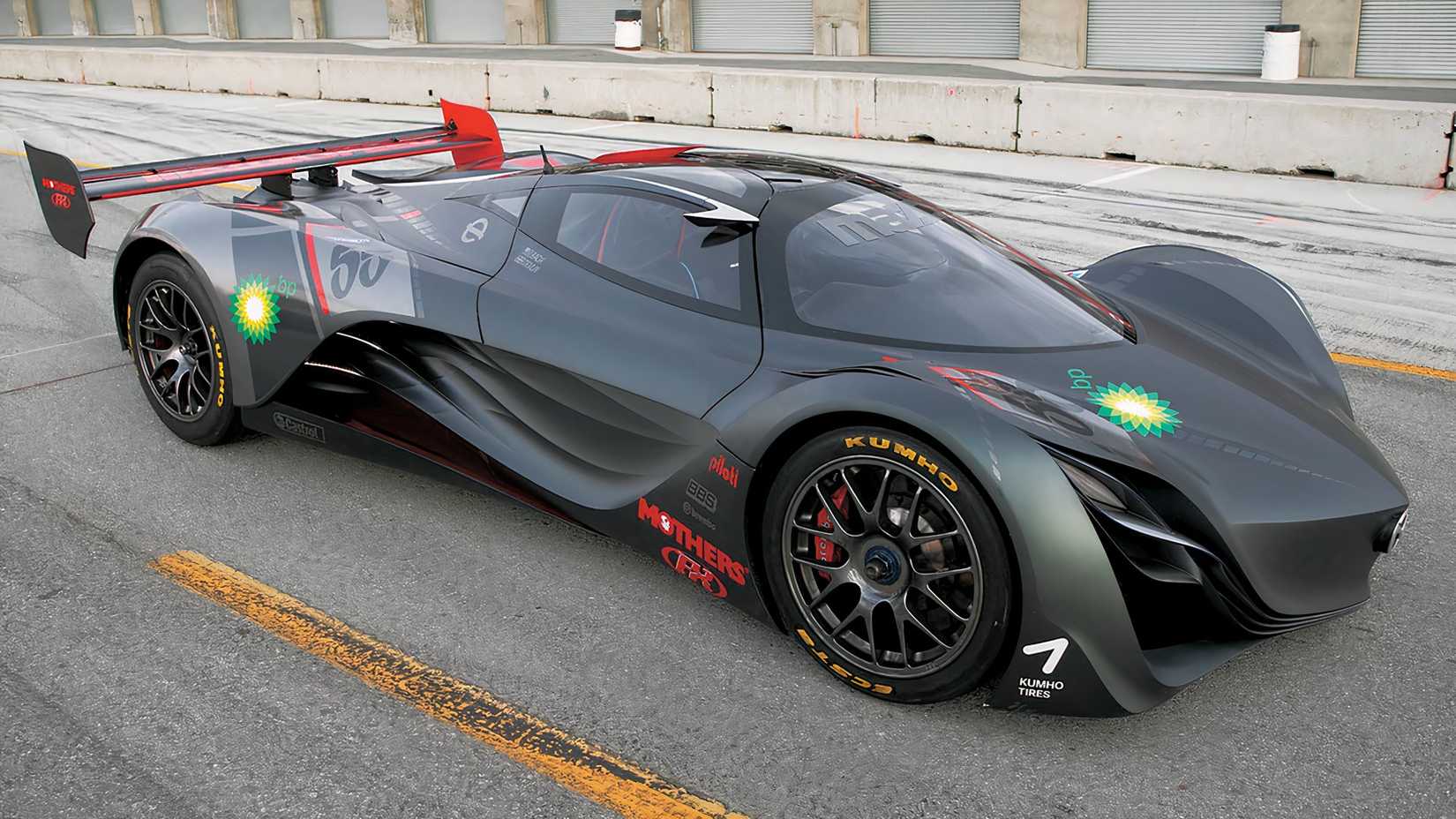
| 2008 Mazda Furai | |
| Engine | 2.0-liter R20B twin-turbo Rotary |
| Power | 450 hp |
| Torque | 278 lb-ft |
| 0-60 mph | 3.8 seconds (est) |
| Top Speed | 180 mph (est) |
| Curb Weight | 1,488 lbs (est) |
During the early 2000s, Mazda was going through something of a design revolution. Even though it had the sporty MX-5 roadster and RX-8 coupe in the line-up, the rest of its offerings were far more pedestrian in design and execution.
The first signs of change started with the “Zoom-Zoom” marketing tagline introduced in 2000, signaling a shift in Mazda’s focus to the fun part of the driving experience. This ethos resulted in a series of fascinating concept cars using the Nagare design language, followed by the Kodo “Soul of Motion” phase, which influenced real-world models like the CX-5 and Mazda3.
What’s “Nagare” Anyway?
But let’s rewind to the Nagare phase, as this is when the stunning car you see here was developed. Nagare means flow in Japanese, and this philosophy was used between 2006 and 2007 to create five interesting concept cars, each exploring different ways in which Nagare could be interpreted in future Mazda vehicles.
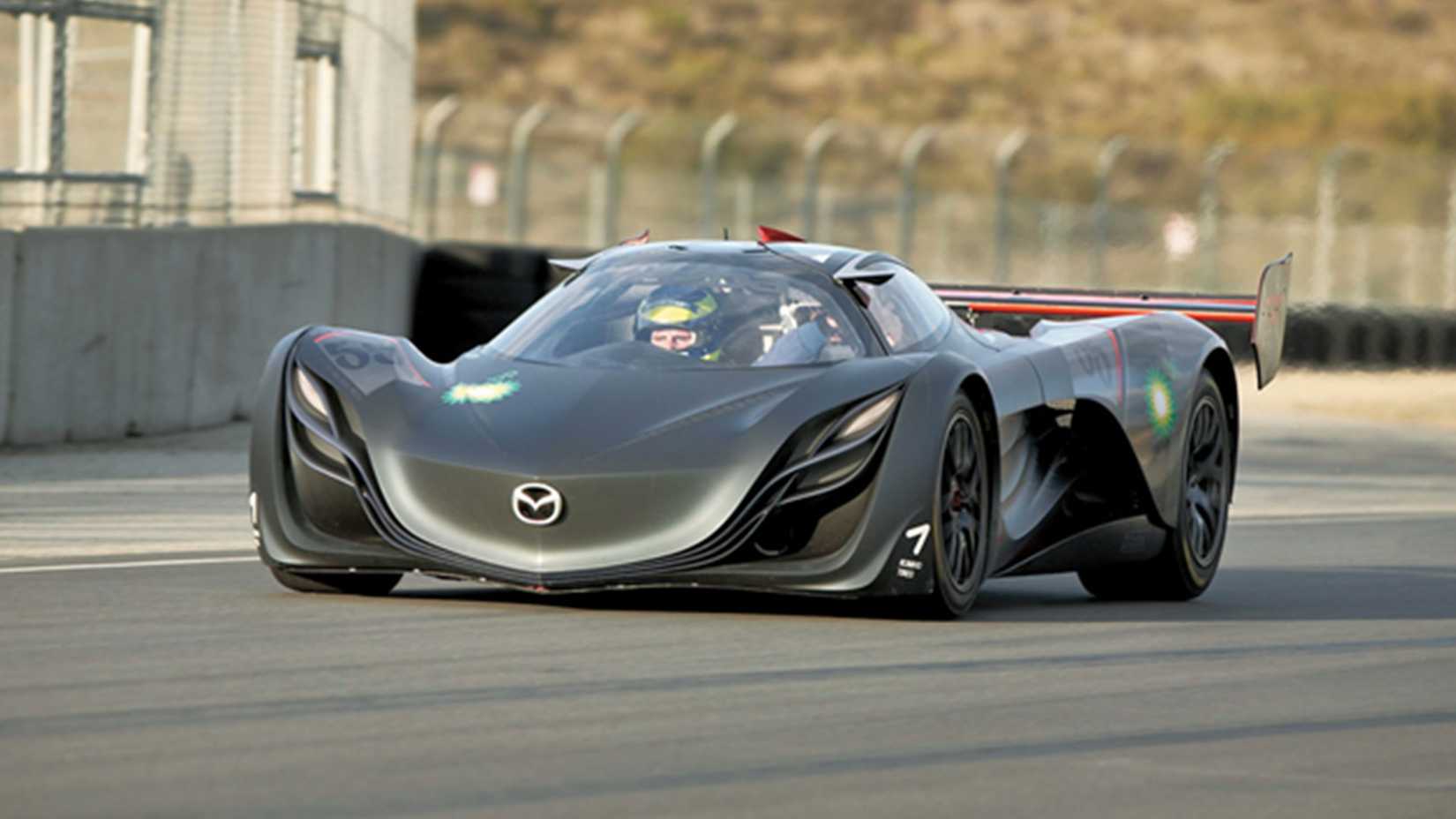
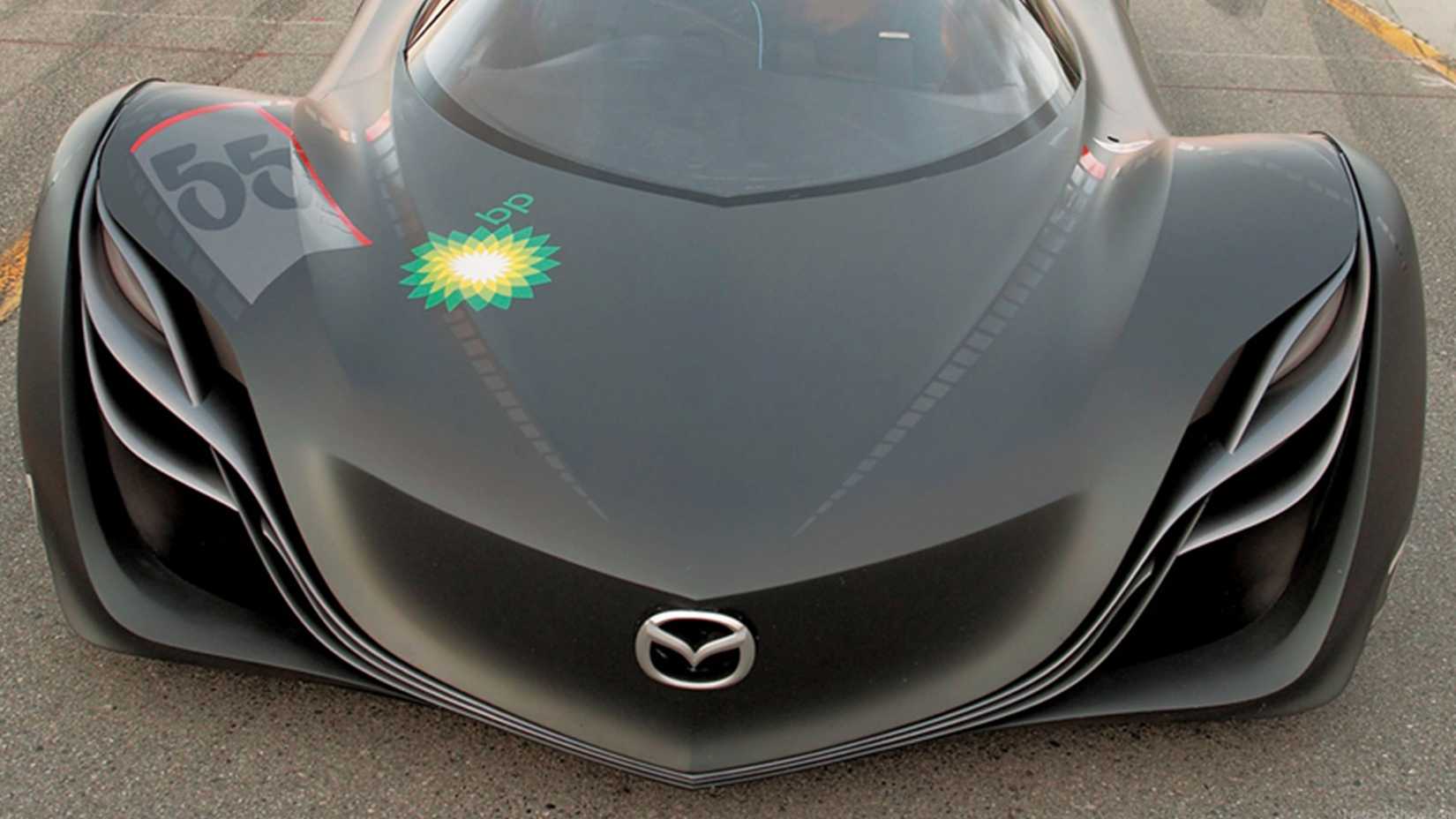
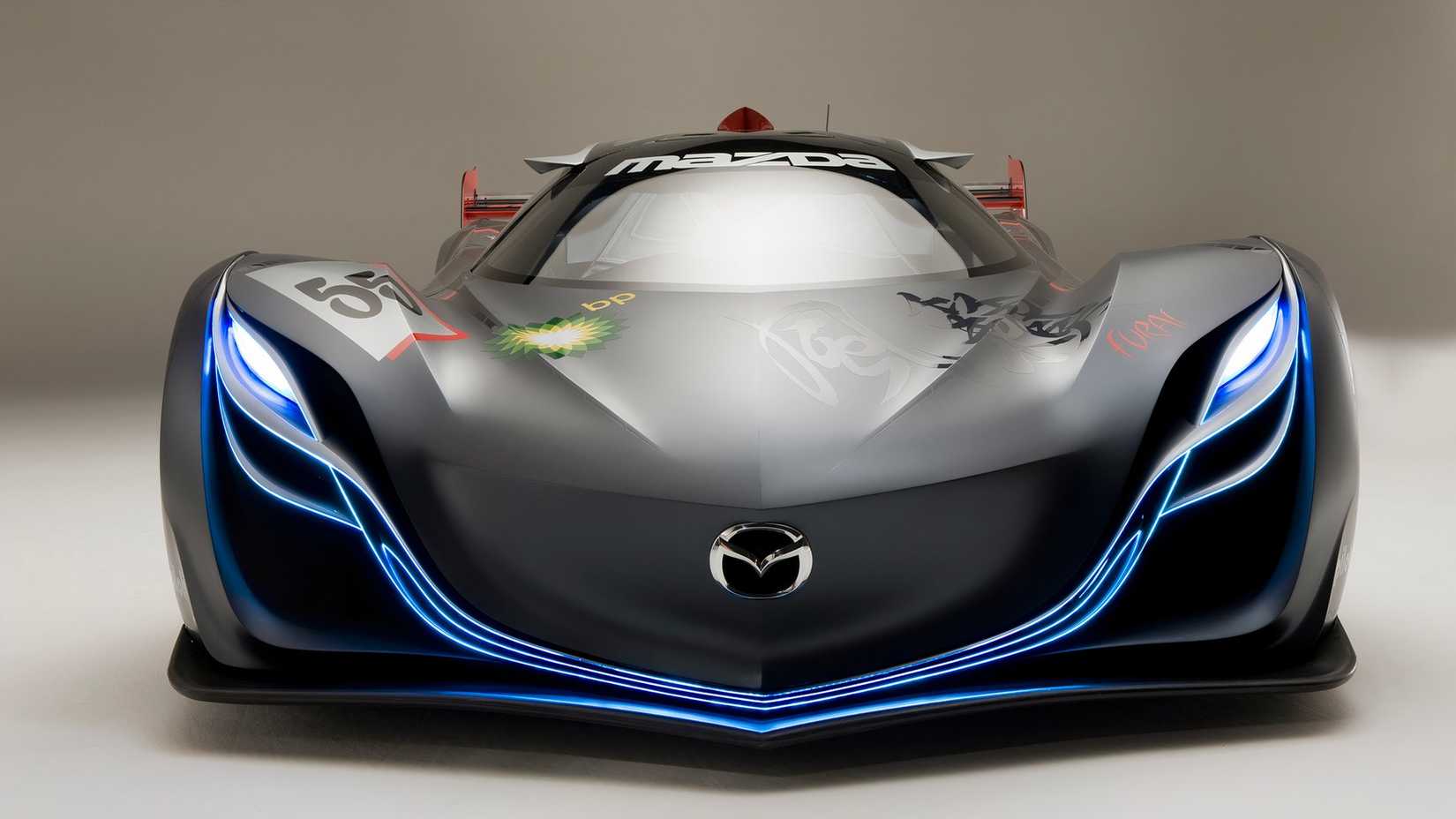
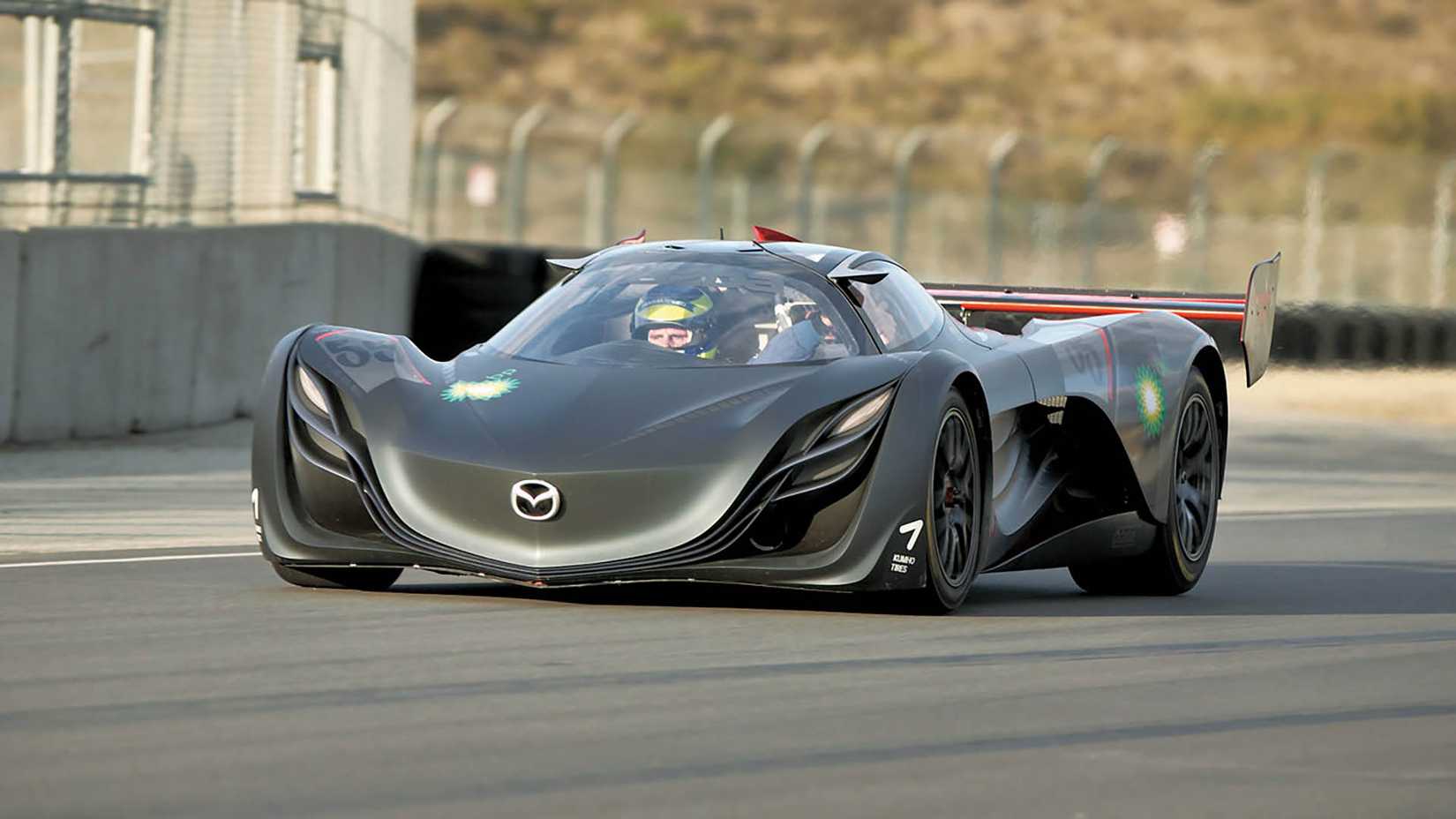
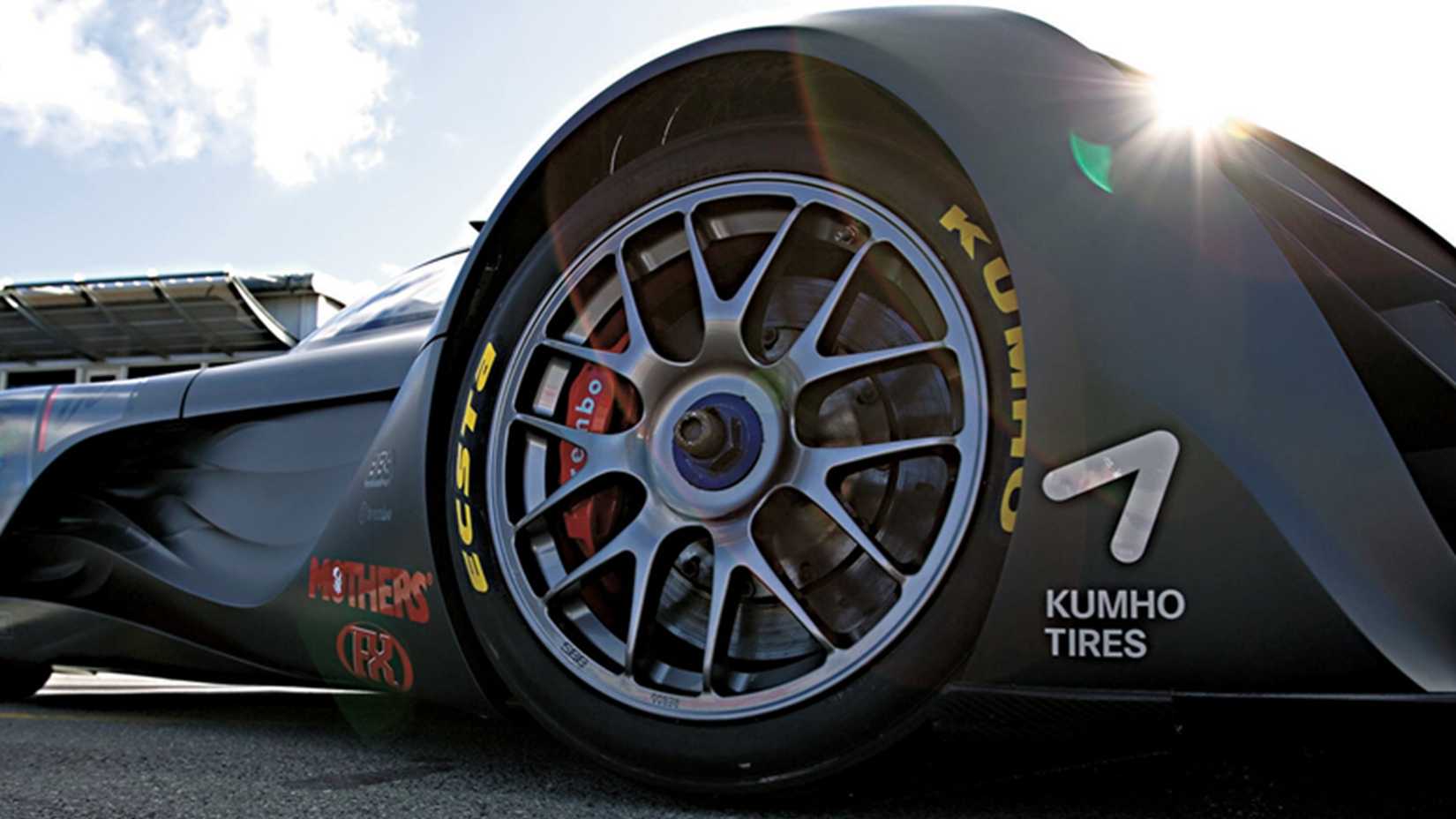
Fifth and last in the series was the Furai, a futuristic road-legal race car that explored how the Nagare concept would translate to a hypothetical Le Mans racer from the future. Very well, it turned out, as the Furai was stunning from any angle. The flowing lines successfully conveyed a feeling of pent-up power and aggression, while managing to make it look achingly beautiful at the same time.
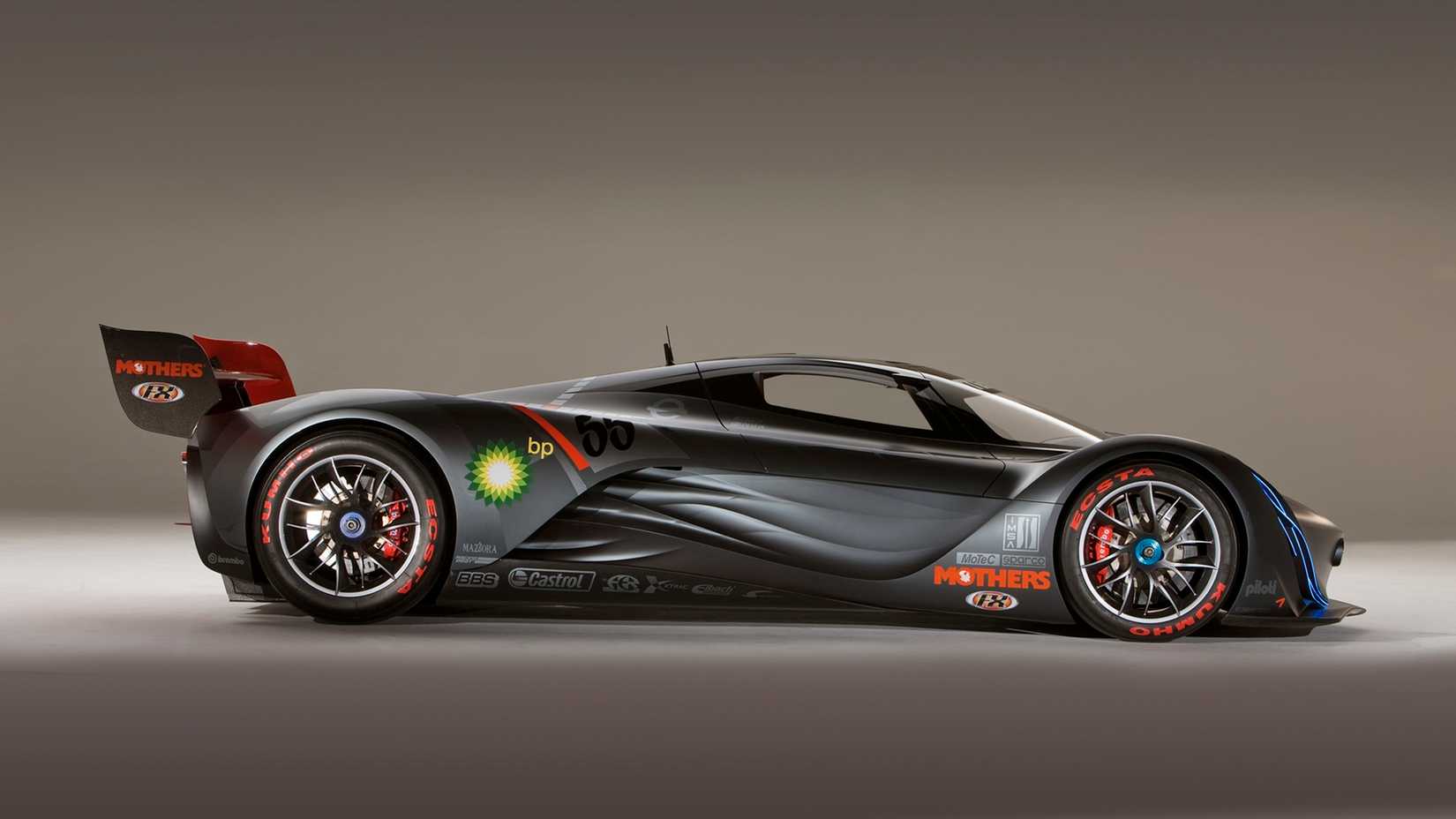
We have a love-hate relationship with concept cars, especially when they have an achingly beautiful design aesthetic yet amount to nothing more than just a static work of automotive art. Had the Furai been just a rolling work of art with nothing but wooden scaffolding beneath that sculpted bodwork, we would still have admired Mazda for its boundary-pushing design, but there was far more to the Furai than just a pretty face.
What Made The Mazda Furai Unique?
“Concept cars are sometimes just flights of futuristic fancy, designed to snap our heads in unrequited automotive lust.”
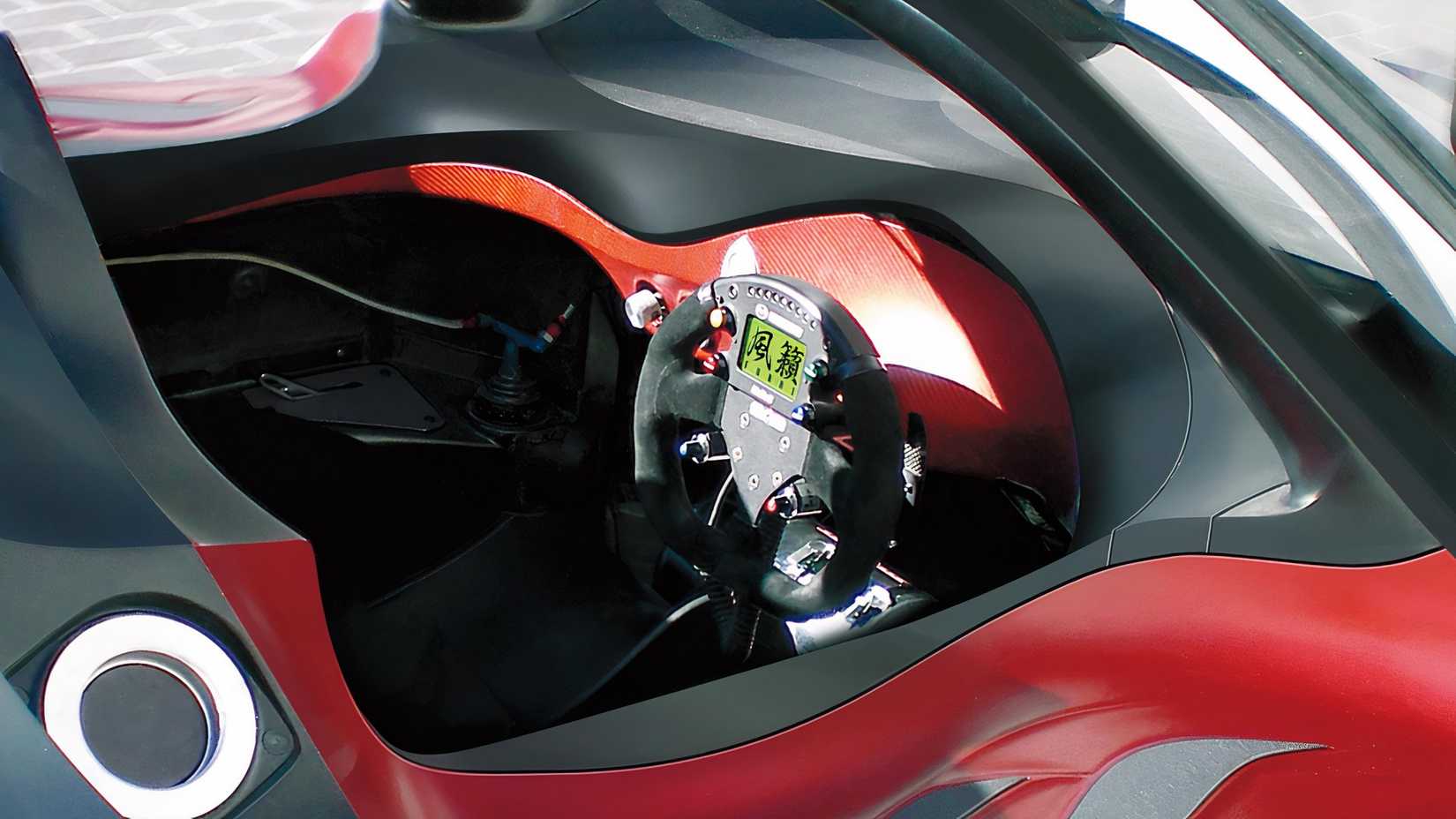
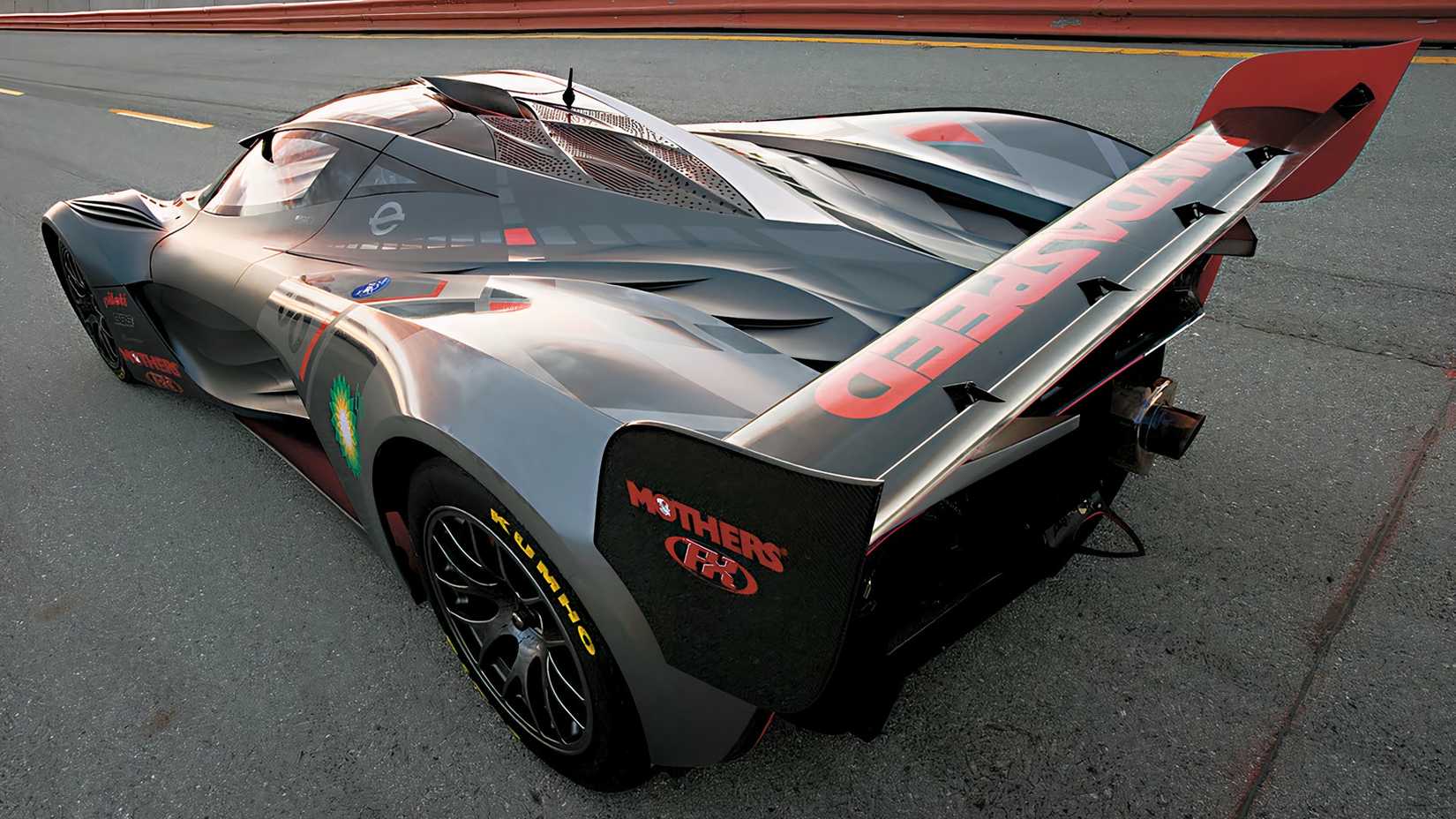
The Mazda Furai was so much more than just another automotive artwork, because instead of balsa wood, nails, and some paint from Home Depot, this car’s bodywork was made from carbon fiber, while the chassis was from an LMP2 C65 Courage. LMP stands for Le Mans Prototype. That combo made it both extremely light and very capable on the track.
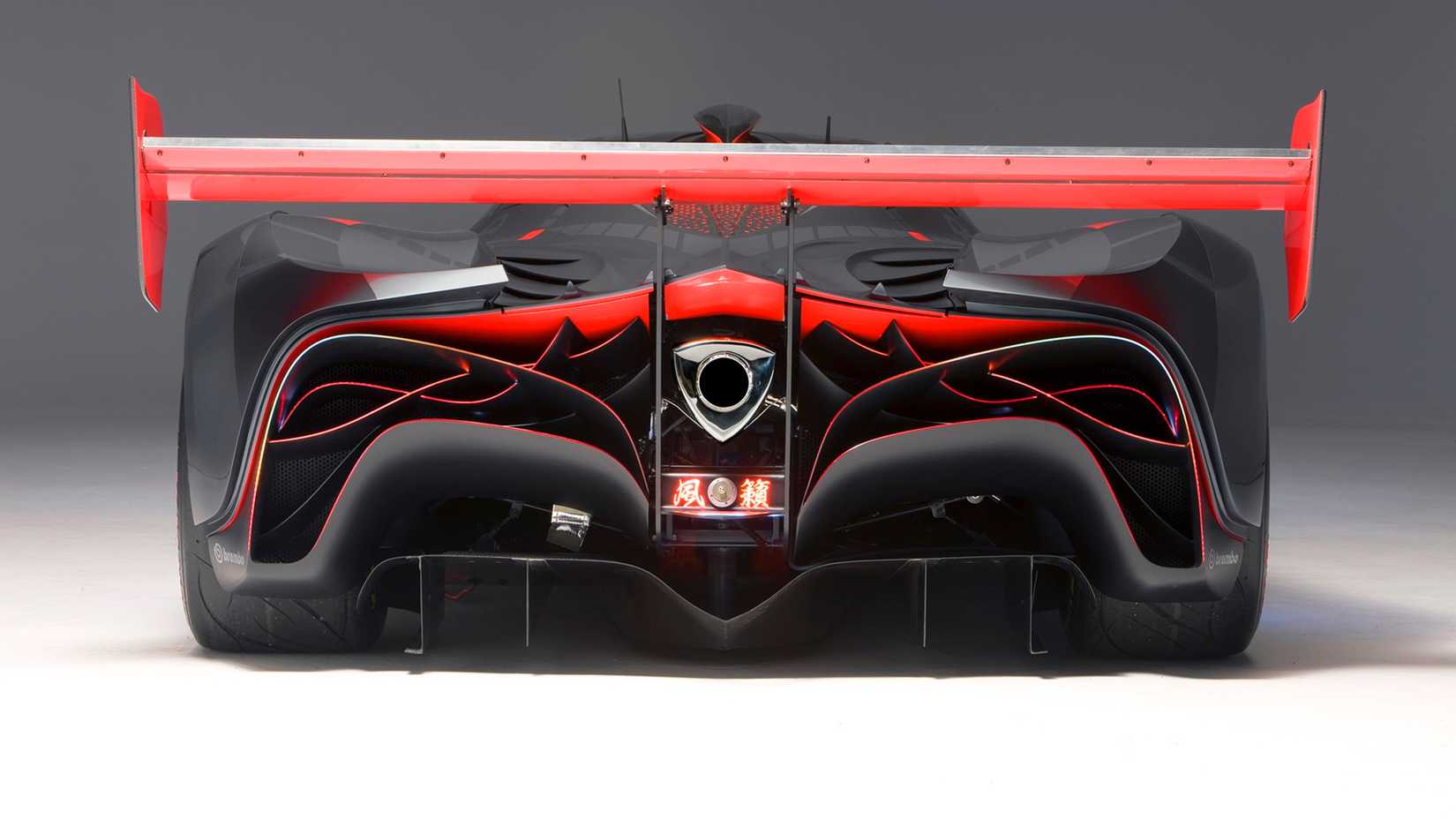
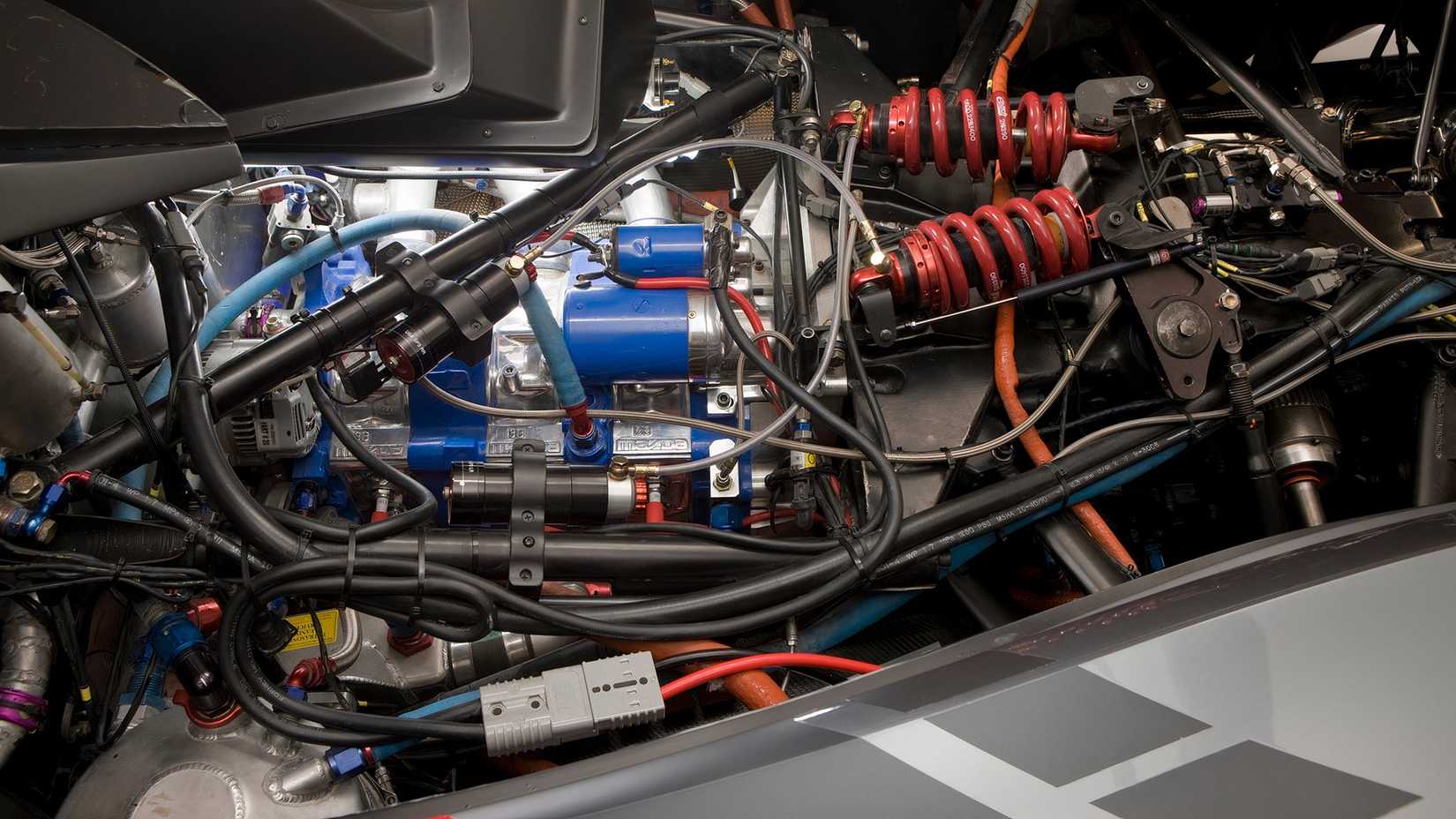
A 2.0-liter twin-turbo rotary engine was fitted in the middle, and power was sent to the rear wheels through an Xtrac semi-automatic 6-speed transmission. That three-rotor 450-hp R20B twin-turbo motor ran on a special 100-percent ethanol racing fuel, developed by Mazda’s sponsor BP, and it gave the Furai a sound like an X-Wing space fighter screaming by in pursuit of some Rebel scum.
The Star Wars references don’t end there, because, like the Death Star, every aspect of the Furai was fully operational. However, unlike Darth Vader’s weaponized mobile home, the exterior was completely finished as well.
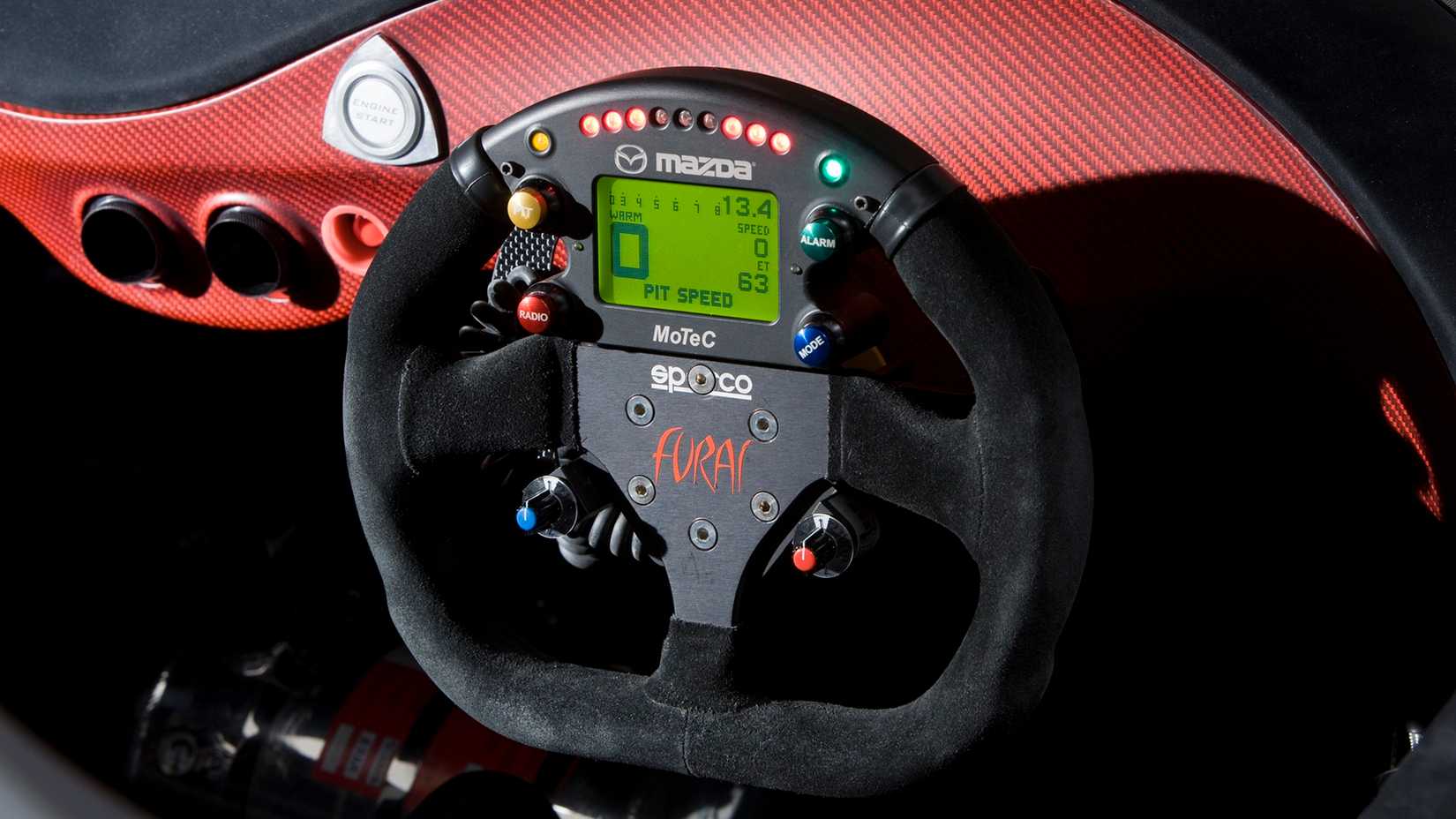
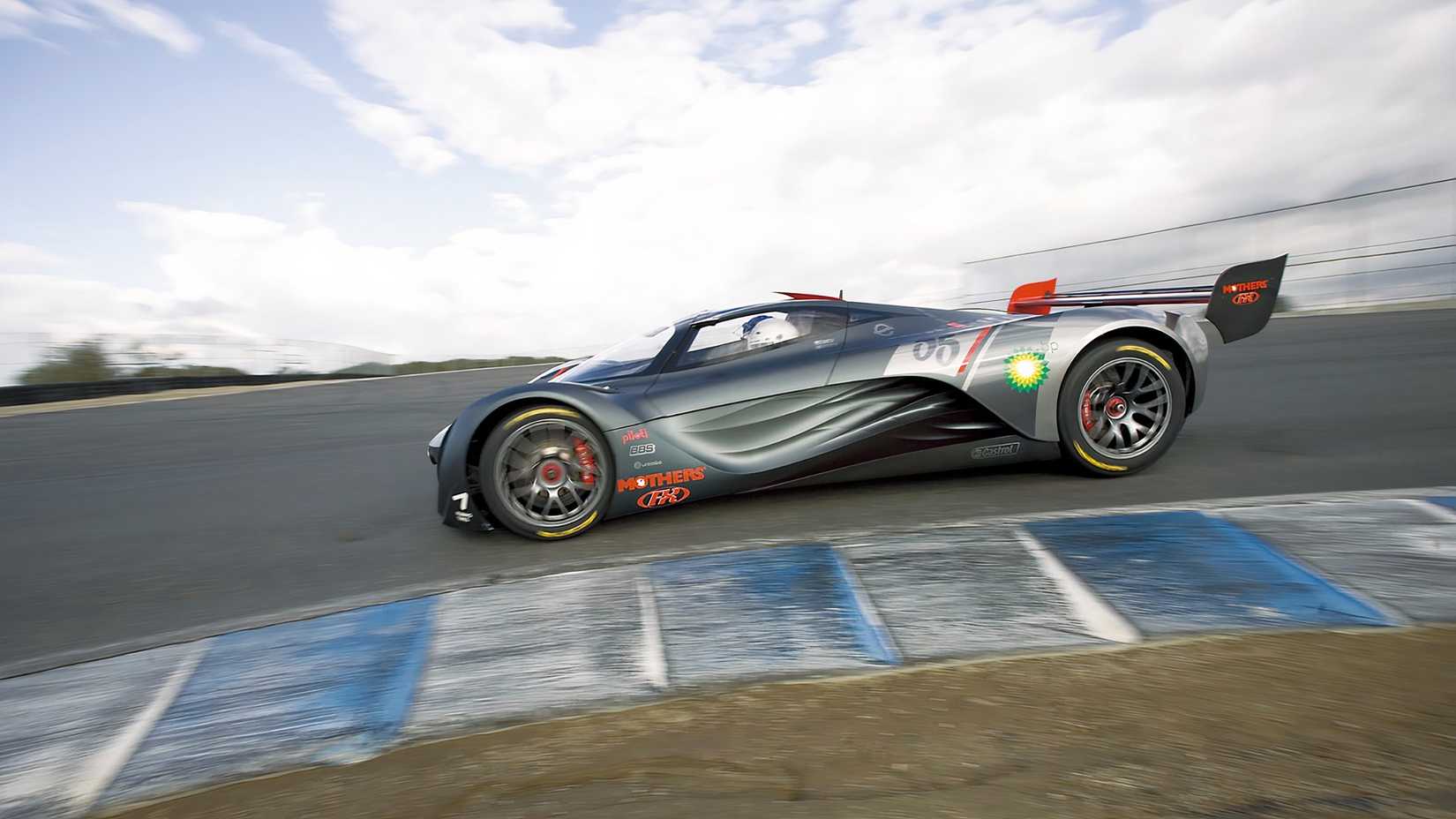
The Furai didn’t just look like a futuristic Le Mans race car; it went like one, too, demonstrating its prowess on various racetracks around the world. Emblazoned with the numbers 55 on its side in homage to the legendary Mazda 787B Group-C race car, the Furai seemed like a foreshadowing of Mazda’s future racing aspirations. But fate had something else in store for this one-off wonder.
The Fate Of The Furai
Mazda says that the word “furai” means the sound of wind. Not being fluent in Japanese, we won’t argue with that claim, but doing a quick search reveals that to most Japanese people, “furai” is derived from the English word “fry”, and refers to a cooking method. Considering what happened to the car, we think this is a more apt meaning anyway.
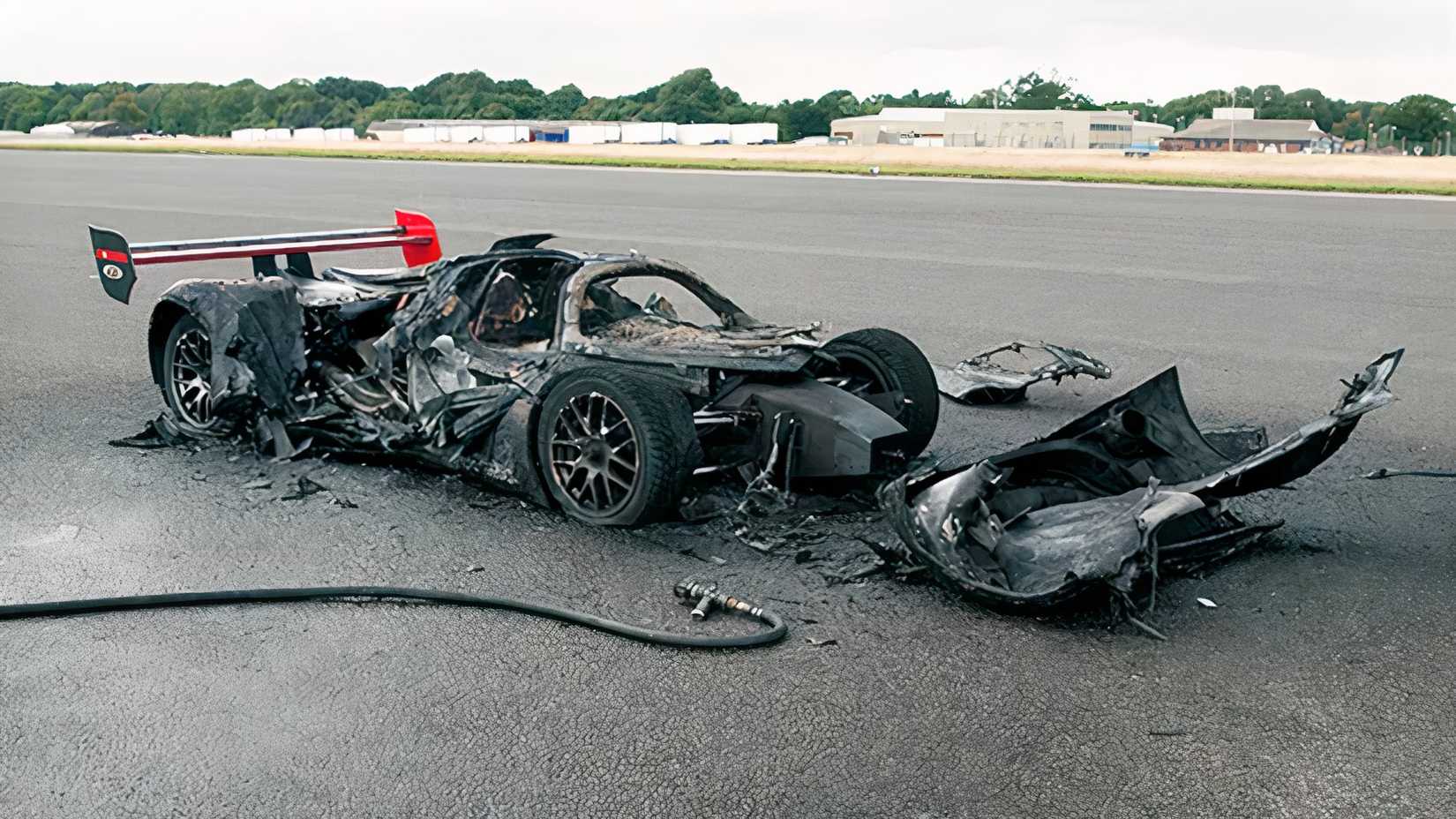
On August 19, 2008, at the Bentwaters Parks Top Gear test track, the Mazda Furai was being given a shakedown by the Stig along a 1.3-mile-long runway. Staff writer Bill Thomas then took the helm — the first and last journalist to do so — and familiarized himself with what was, in essence, an undiluted race car. All went well, and the car was returned to Mazda works driver Mark Ticehurst to complete a handful more runs for the photographer to bag a few more shots, preferably one showing flames spitting out of the centrally mounted exhaust pipe.

Unfortunately, the photographer got a lot more than he bargained for, as on one of the final runs, the car caught fire, and by the time the fire crew had managed to arrive on the scene, there was not much left to be saved. The remains of the Furai were scooped up and shipped off to Mazda’s Advanced Design Studio in Irvine, California. It took five years for the story to be made public, with the event finally being aired on Top Gear on November 29, 2013. And that was that.
What About The Other Four Nagare Concept Cars?
We skipped over the other four Nagare concepts earlier, but let’s take a quick look at each one here to end things off on a positive note.
Mazda Nagare – Flow
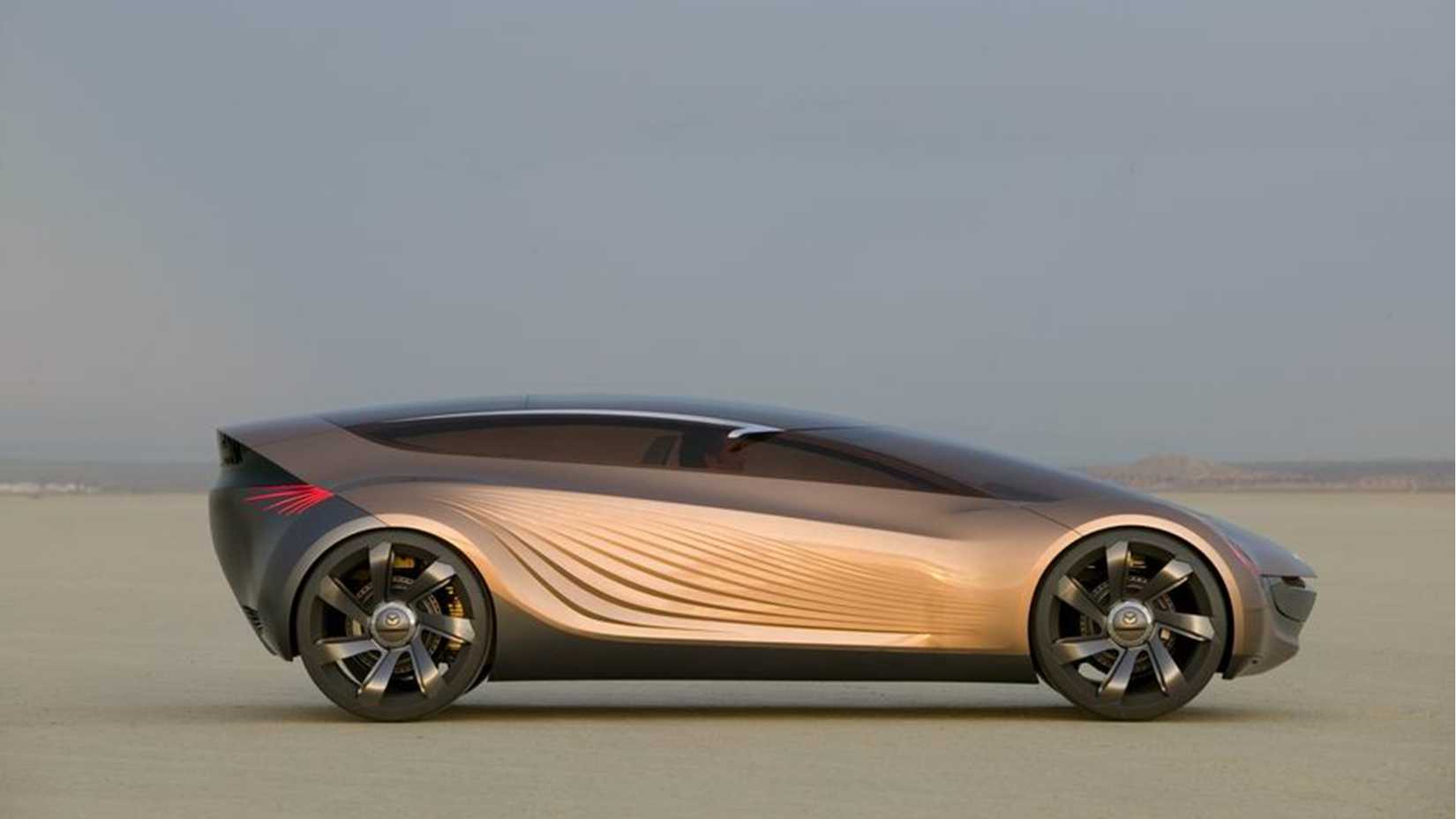
The Mazda Nagare was the first car to be developed and was named after the design language itself. The Nagara featured a central driving position, butterfly doors, and three passenger seats arranged in a circular lounge-like setting. A pure visual concept, the Nagare had no running gear.
Mazda Ryuga – Gracious Flow
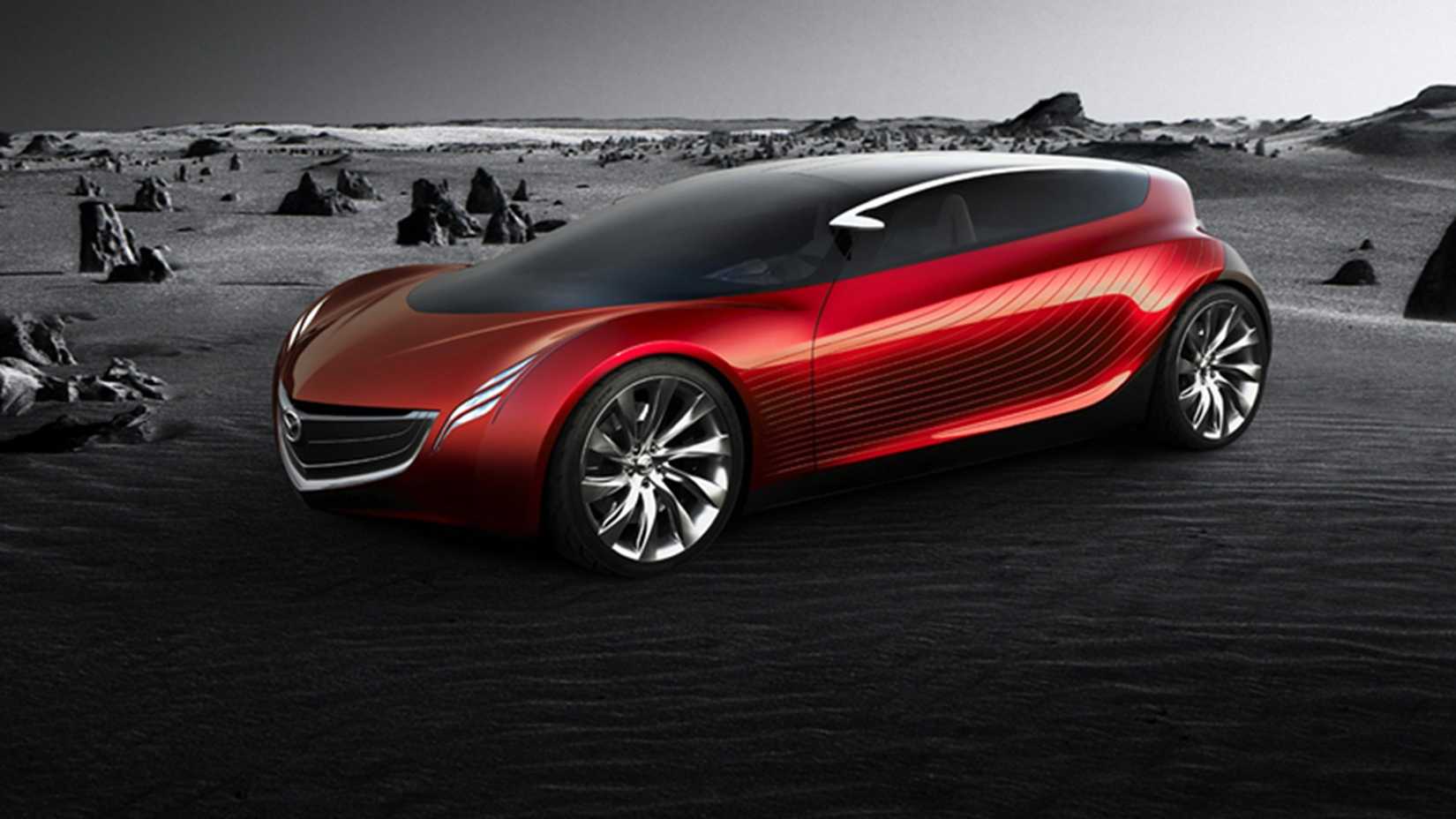
The two-door Ryuga coupe was next. This one had more conventional passenger accommodation, with two front and two rear seats. There was a yoke-style steering wheel and digital screens for side mirrors, while the entire vehicle was lower and shorter than a conventional sports car. Motive power came from Mazda’s 2.5-liter inline-four engine, mated to a six-speed automatic transmission.
This concept focused on vehicle safety and the overall driving experience. The Ryuga was shown to be driving in promotional videos, but was never tested by journalists, so may have been no more than a rolling testbed.
Mazda Hakaze – Leaf Wind
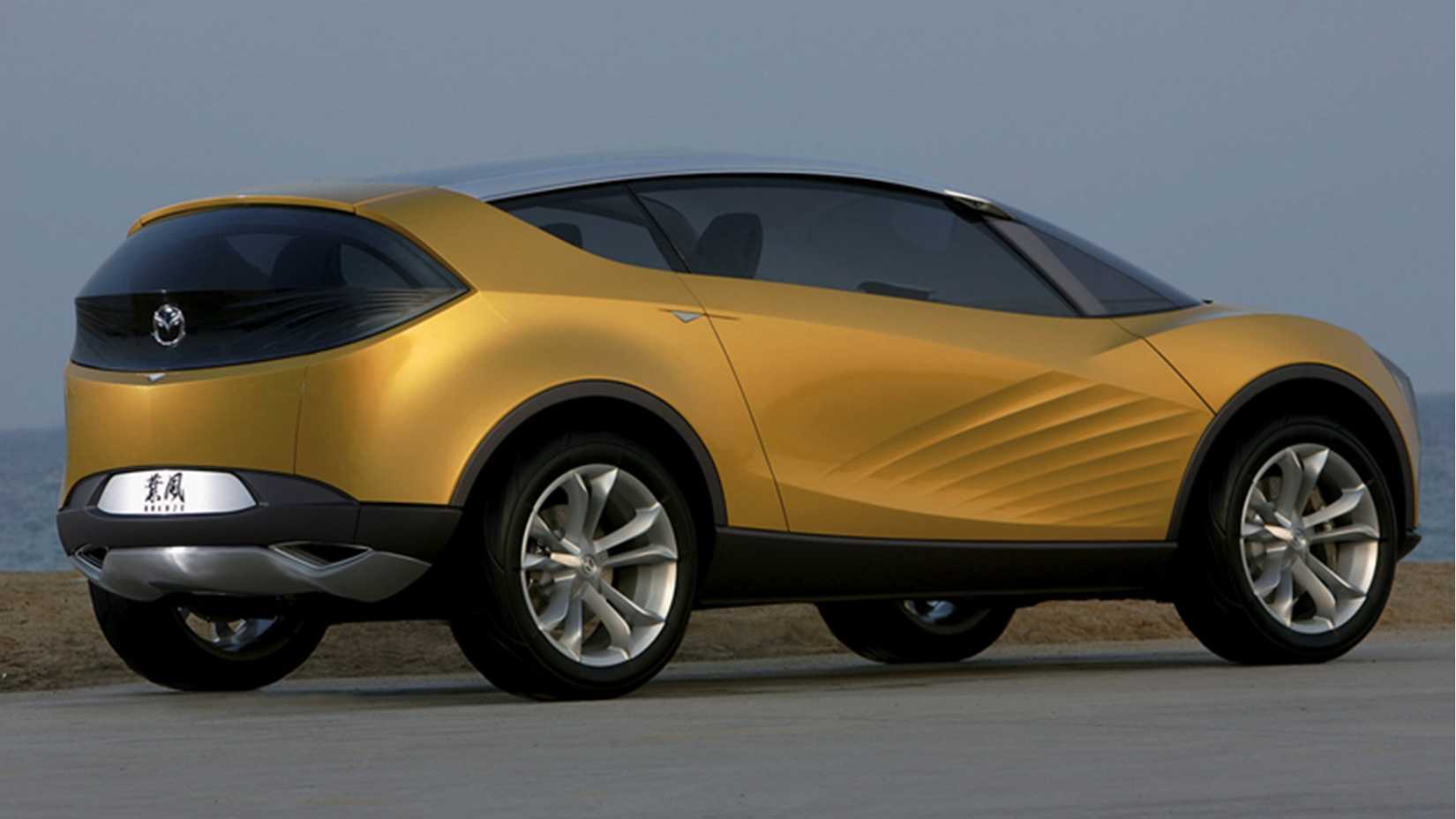
The Hakaze was designed to combine the attributes of a crossover, coupe, and roadster into one vehicle. It had four seats, two scissor doors, all-wheel drive, and featured a removable roof section. This one had a 2.3-liter turbocharged inline-four engine, a six-speed automatic transmission, and was said to be closer to a production-ready state than the two previous concepts.
Mazda Taiki – Atmosphere
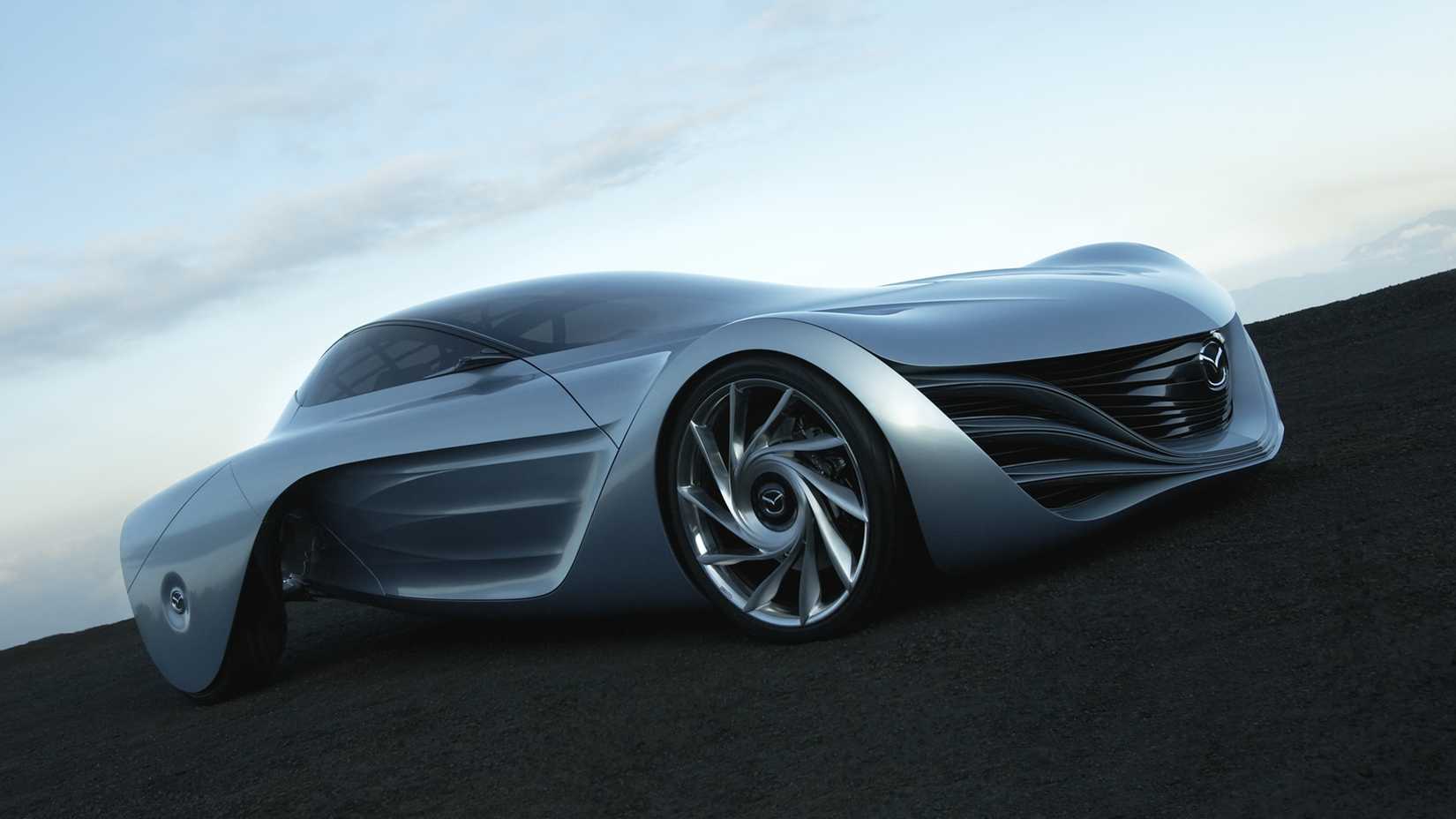
Fourth in the series was the Taiki, a two-seater supercar concept that was influenced by flowing robes. Yes, you read that right, but it looked a lot better than that sounds, and had an impressively low 0.25Cd drag coefficient, probably a lot less than an actual robe.
Equipped with a 1.6-liter rotary engine – mounted far back in the engine bay – and a seven-speed twin-clutch transmission, the Taiki was Mazda’s idea of an environmentally sustainable future sports car. Unlike the Furai, this was not a driveable vehicle.
The Nagare Influence
While none of the Nagare concepts ever made it to production, they heavily influenced future Mazda concepts like the 2010 Shinari, and the 2011 Takeri. The latter previewing the sporty Mazda6 sedan. Mazda’s modern crossovers and SUVs still feature these Nagare styling elements, and perhaps one day we will see a Furai-styled sports car in its lineup.
Sources: Mazda, Mazda newsroom, Mazda press
Zenvo TSR-S เปิดตัวด้วยสีน้ำเงิน ‘Grotta Azzura’
20 มี.ค. 2562 8 views
ณ งานแสดงรถยนต์ที่จัดขึ้นในเมืองเจนีวา ได้มีการเปิดตัวไฮเปอร์คาร์รุ่นหนึ่งที่มีชื่อว่า Zenvo TSR-S โดยมันมาพร้อมกับสีน้ำเงินแบบใหม่ที่ชื่อว่า ‘Grotta Azzura’ โดยเฉดสีดังกล่าวตั้งตามชื่อของถ้ำสุดสวยแห่งเกาะ Capri ในอิตาลี นอกเหนือไปจากนั้นยังตัดแต่งบนตัวถังด้วยลายแข่งสีขาว

Zenvo TSR-S ทรงพลังด้วยเครื่องยนต์ทวินเทอร์โบ ขนาด 5.8 ลิตร V8 กำลัง 1,177 แรงม้า ที่ 8,500 รอบต่อนาที และแรงบิดสูงสุดมากกว่า 1,100 นิวตันเมตร เชื่อมต่อเข้ากับเกียร์ Paddle Shift ที่ใช้ในวงการมอเตอร์สปอร์ตแบบ 7 สปีด


ไฮเปอร์คาร์จากเดนมาร์กสามารถเร่งจาก 0-100 กม./ชม. ในเวลาเพียง 2.8 วินาที และ 0-200 กม./ชม. ใน 6.8 วิ ส่วนความเร็วสูงสุดอยู่ที่ 325 กม./ชม. (202 ไมล์/ชม.)

ความโดดเด่นที่ไม่ค่อยพบในรถยนต์รุ่นอื่น ๆ คือ Zentripetal Wing ปีกหลังที่สามารถปรับขึ้นลงตามการเลี้ยว อีกทั้งยังทำงานในฐานะ Air Brake สร้างแรงต้านช่วยลดระยะการเบรก และเมื่อเข้าโค้งยังช่วยสร้างแรงกดไปข้างใดข้างหนึ่งอีกด้วย


Peter van Rooy ผู้อำนวยการฝ่ายการตลาด Zenvo กล่าวว่า “เหมือนกับรถยนต์รุ่นอื่น ๆ ของเรา Zenvo TSR-S ถูกออกแบบ และสร้างสรรค์ขึ้นด้วยมือในจำนวนที่จำกัดโดยชาวเดนมาร์กแบบ 100%” และ “รถแต่ละคันสามารถปรับแต่ง และสร้างได้ตามความต้องการของลูกค้าที่กำหนดได้อย่างแม่นยำ”

สำหรับการสร้างสรรค์ Zenvo TSR-S ได้เริ่มขึ้นแล้ว และมันถูกกำหนดจำนวนการผลิตไว้เพียง 5 คัน ต่อปี

เพื่อน ๆ สามารถติดตามข่าวสารการเปิดตัวรถยนต์ และนวัตกรรมใหม่ ๆ ทั้งในประเทศ และต่างประเทศ ได้ที่ Thaicarlover.com หรืออีกหนึ่งช่องทางง่ายๆ จากทางแฟนเพจ เพียงกด